
Books that are difficult to read win literary prizes. But if you want everyone to read your work, don’t make it longer than it needs to be.
Writers love words. But for every hundred extra words you write, whether it’s a poem, essay, article or book, you might lose at least one reader. I love poetry but when I flip through a book of poems I go to the shorter poems first and when I reach the long ones I don’t always finish them.
I’m capable of the long read. I successfully tackled Finnegan’s Wake by James Joyce, considered the Everest of book reads.
But a long news story has to be compelling or the writer has to be talented to get me through it.
Now, your goal might be to write a classic that will still be read 100 years from now. If so, you can stop reading this article. But know that, with the general exception of Stephen King, the longer the book, the fewer the readers.
The challenge to inform the most people, is to say all that needs to be said in as short a length as possible. Here is my mantra: The delete key is my friend.
Time to trim
First, kill the adverbs. Those are words that modify verbs. They often end in -ly. Sometimes an adverb is necessary but often it is redundant or weakens the verb. Here is the start of a sentence from a New York Times article:
Iran, fearing that its hold over the crucial Strait of Hormuz shipping lanes was gradually slipping away…
Now read the sentence without the word “gradually.”
Second, delete adjectives that tell, rather than show. Consider this sentence from a story on the Guardian news site about protests by Volkswagen workers in Germany: “Blume has drawn up a radical transformation plan, with the key sticking points being the possible closure of four German plants – Hanover, Emden, Zwickau and Audi’s Neckarsulm site – as well as up to 50,000 in additional job cuts tied to it, sources have said.
The writer didn’t need the word “radical”. It tells us something. But then the writer explains that four plants will close and 50,000 people will lose jobs. That’s the radical.
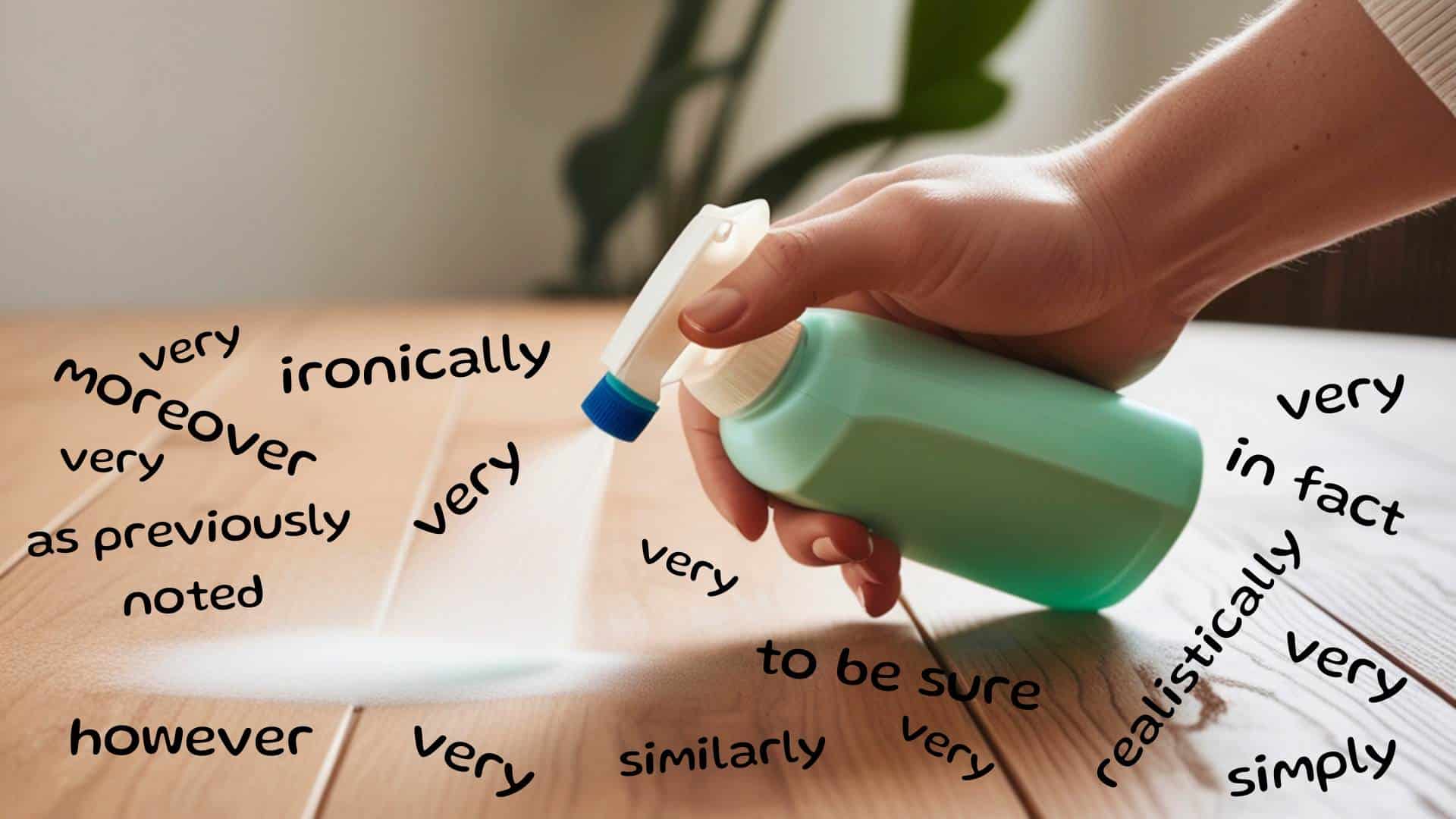
Kill words that say little. The most glaring example is the word “very.” It says nothing. But there are many such phrases writers use: Moreover…, however…, in fact.., to be sure…, on the other hand…, ironically…, as previously noted…, there is no doubt that…, realistically…, it is worrisome that… I could go on and on.
Lose the fat
Kill any unnecessary repetition. That means that you delete quotes from a source who repeats what someone else said. You delete a quote that repeats something you said. Or you delete what you wrote because you have someone quoted saying the same thing.
Why does a writer have that kind of repetition? Because it took them time and effort to get that interview and they want to include a quote from the interview to show that.
Kill the widows. In writing a “widow” is the short line at the end of paragraphs. Go paragraph by paragraph and see if you can eliminate that partial line by trimming the paragraph using the techniques above or rewording. In the fourth paragraph of this article, for example, I cut one word by changing the phrase “super interesting” to “compelling.”
When you get to the last paragraph, change the margins of your pages and to create new widows. Repeat the exercise. It is a tedious task the result is rewarding; tight sentences and paragraphs a reader will fly through.
The art in trimming is to cut without losing any important content. If you can do that, it is like the feeling you get after you take a shower. Your writing feels clean.
Questions to consider:
1. Why should you avoid using adverbs?
2. Why do many readers avoid reading lengthy works?
3. What was the longest book you’ve finished and what about it did you like or dislike?

Marcy Burstiner is the educational news director for News Decoder. She is a graduate of the Columbia Journalism School and professor emeritus of journalism and mass communication at the California Polytechnic University, Humboldt in California. She is the author of the book "Investigative Reporting: From premise to publication."
💡 More Tips Like This
This story is part of News Decoder’s open access learning resources.
Whether you’re a secondary student, studying at university or simply interested in learning new things, we can help you build your journalism skills and better understand big global issues.
If you are a student or a member of a News Decoder Club, check out our other learning resources.
If you are a teacher, check out our other classroom resources:
- News in the Classroom
- Educator’s Catalog of classroom exercises
And ask us about joining the News Decoder Club program.